


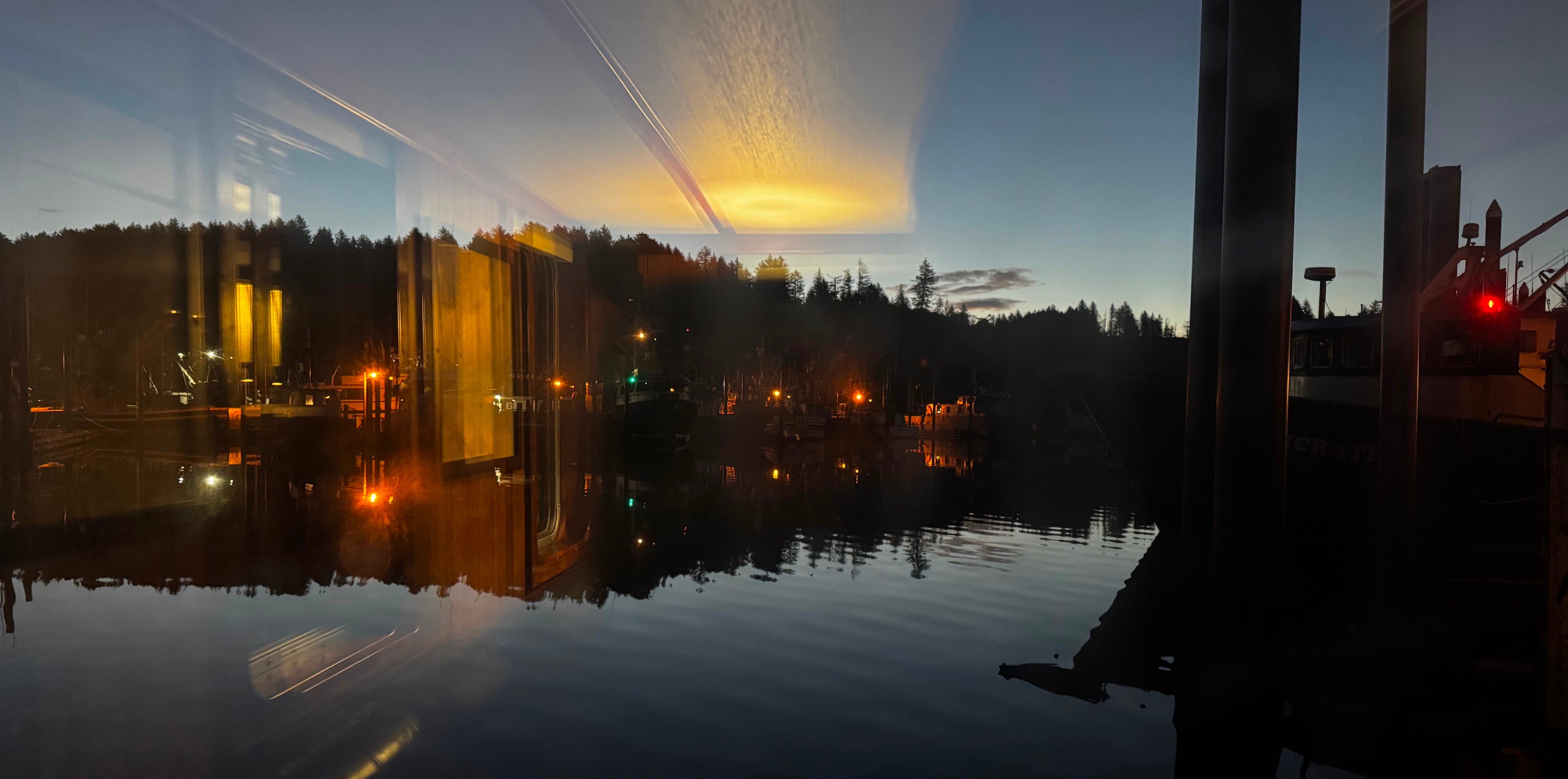
I’m alone with my coffee. It’s quiet and mostly still dark in Kodiak after eight. But t looks like it will be a beautiful day - the water in the harbor is like a sheet of black glass, so all the boat lights are reflecting in it with barely a ripple. Bill and I are readying the boat for the winter before we fly away for a couple of weeks of vacation! Just the two of us, somewhere hot and dry and sunny. All things that this life up here isn’t.
But before I go, I want to touch base because I don’t know when I’ll write again. When I’m back in the lower 48, my life doesn’t seem interesting enough to share — unless you want to hear about neighborhood walks, babysitting grandkids and trying to cram a Trader Joe’s run in before the ferry. More importantly, I wanted to share how good it feels to be wrapping up this season, our third together on Endeavour, and some things we’re learning.
Usually, after six months, 3,000 miles hosting ten 12-day expeditions of 8 folks, we’re pretty toast. But this year was/is, just different. I’m coming away from our busy season feeling more satisfied than wiped out and already excited about next year.
After countless drafts of trying to get my head around what made the season feel so good, I finally figured out it’s not just that we’ve finessed what we’re doing on the boat. The biggest, most important thing of all is witnessing the hard work pay off, actually seeing the learning, the discoveries, the confidence and gratitude in the others around us; how maybe the trip will change lives.
Sadly, sometimes the opposite is true. We can work our asses off only to see some folks more interested in social media than the glaciers or whales around us; more apt to complain about the heads than willing to clean them. Then, out of the blue, the last expedition, our all-women Wilderness Mariner Course (WMC) was — different, and ran like a finely tuned Swiss watch. I still haven’t found the right word for it, but maybe charmed.
Maybe I’m just more trepidatious about the mariner course because it’s sort of my baby and I feel more responsible. Our student/crews are sailors rather than scientists - so I relate more. The whole darn thing was my idea to share Bill’s knowledge and experience with the folks on our research trips who gravitated to him for it. I also knew firsthand as a woman, how hard it is, to get time on the water. So fast forward three years and we now have dozens of folks interested in our hands-on, at-the-helm wilderness mariner program. One of our gals last week called Bill the professor, and me the dean. I like that. Except I’m also part time admissions director. While Bill is writing a full book covering the course, I network and find the qualified folks, interviewing and building out our student/crews.
I was always a little daunted by this year’s fall WMC. I knew it would take us into bigger, more exposed and remote waters. I wasn’t scared exactly, but I’m a protected-waters person who likes the cozy feeling of land in every direction, even far off on the horizon. I appreciate its calming influence on the water around me. For most of the 440 miles north to Kodiak, one whole side of us would be exposed to the Gulf of Alaska. Every night we’d anchor in protected coves, of course, but otherwise it’d be just us and Shelikof Strait. It sounded intimidating. September felt late. Travel out here is more expensive and complicated. I wondered if I could even find eight women who’d be game.
But Bill had taken Endeavour there enough times to feel comfortable, and when something seems gnarly to me, he stays so damn calm and steady that I’m sort of catching on. So, armed with his experience, I channeled my inner Bill through all those interviews. Over a few months of FaceTime calls I put together a crew of eight out of dozens of willing, adventurous souls.
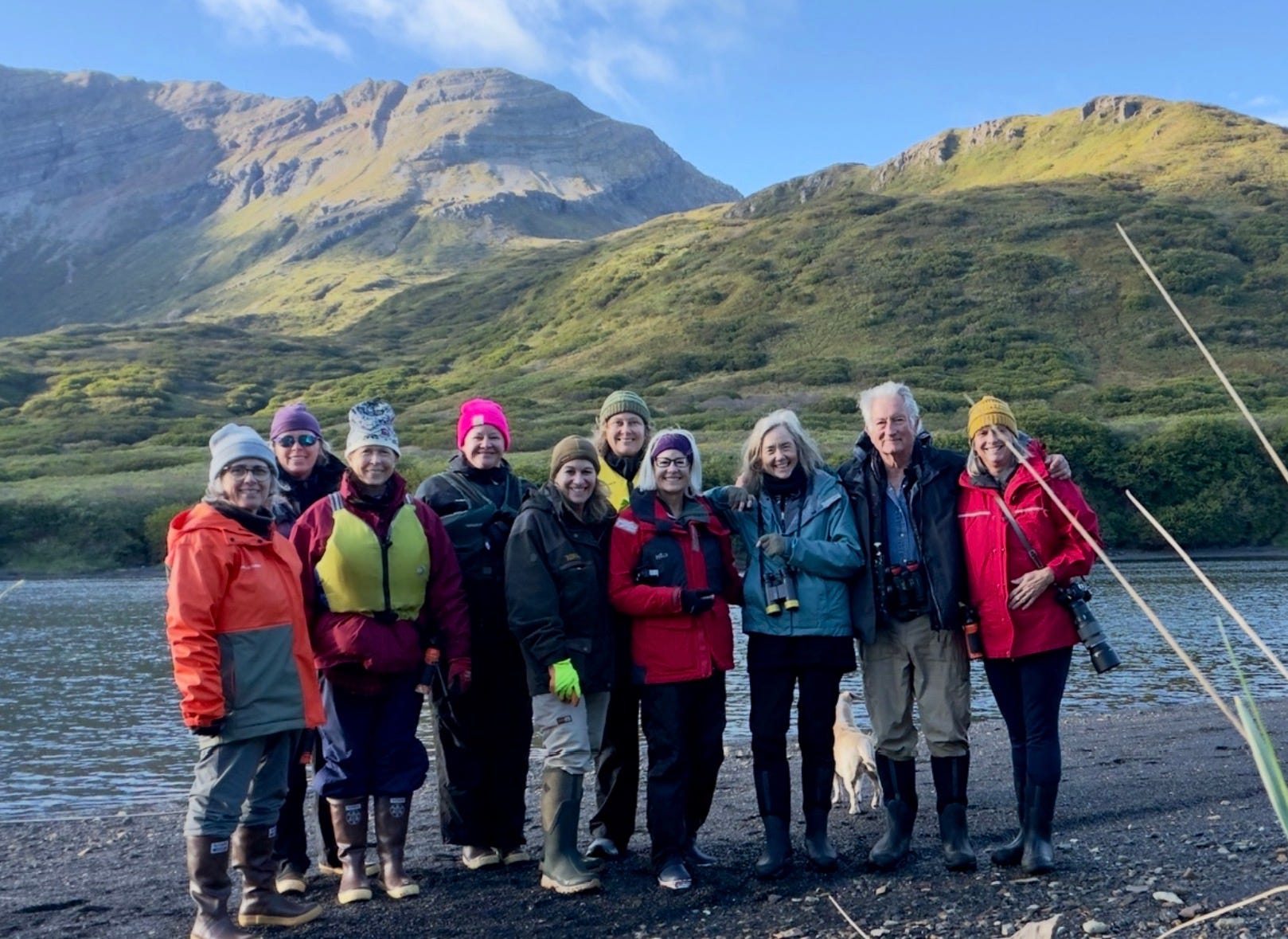
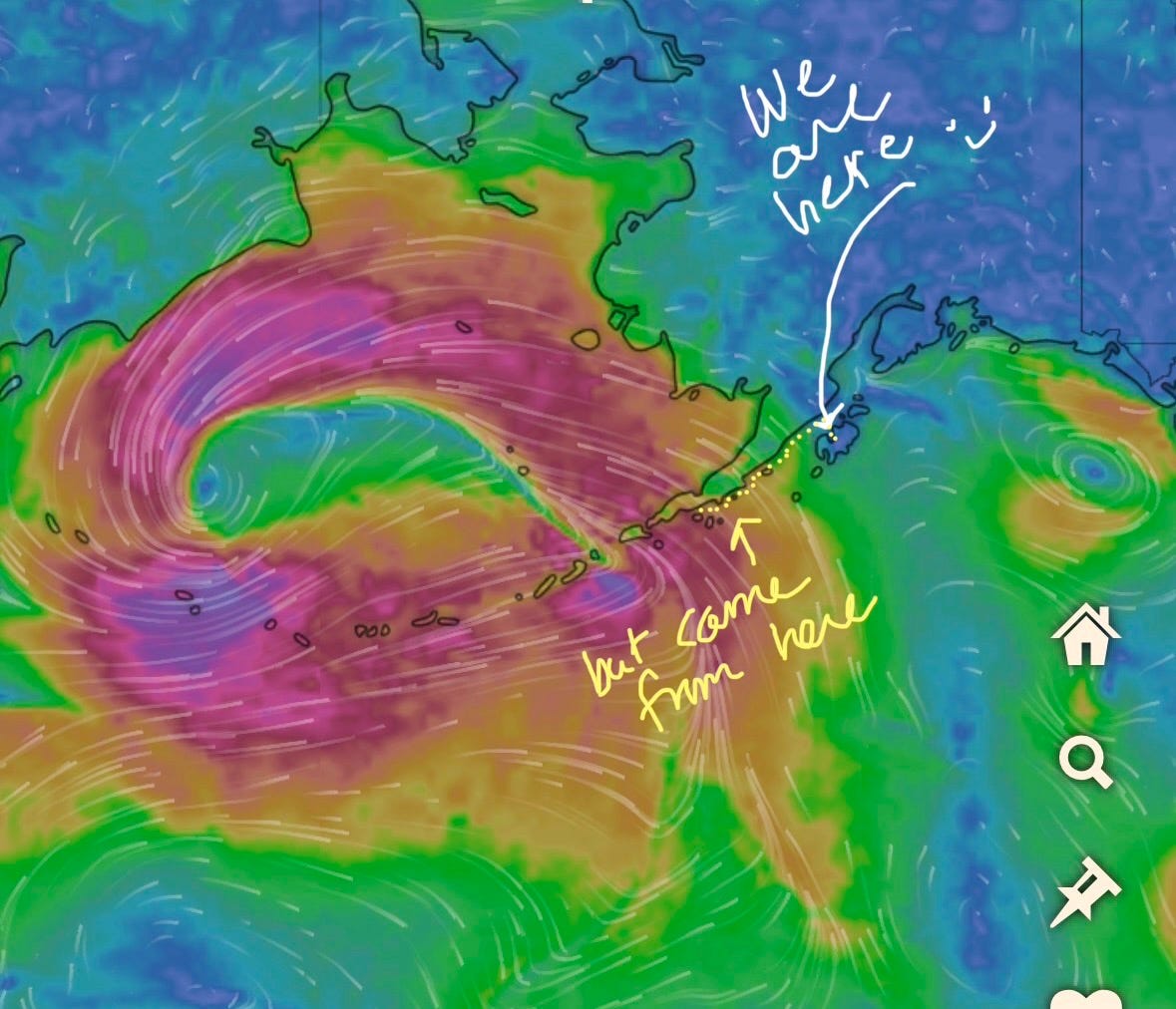
Do you know the Windy app? Anyone who spends time on a boat probably does, or should. Along with rain, sun and clouds, you can dial in wind force, wave size and sea swell. They’re called vectors, and together they tell you what’s going to affect your course and your time on the water. I think they need to add a couple more that can affect a trip more than anything else.
In the class Bill teaches the importance of reading the sea state as well as the weather; what's right in front of us and what’s likely coming. As Captain, it's his job to keep us safe. As our expedition manager, it’s my job to keep folks happy— from room and board, to travel, gear, etc. (That’s where years running a rustic inn in the tropics actually comes in handy.) A big part of my job is reading the room like he reads the forecasts. I pick up on the vibe, the esprit de corps of the folks on board. Like the weather, I have to look beyond today to how the current mood will affect tonight, or tomorrow. One person’s mood or behavior can throw a boat off balance as surely as any wave or wind gust.
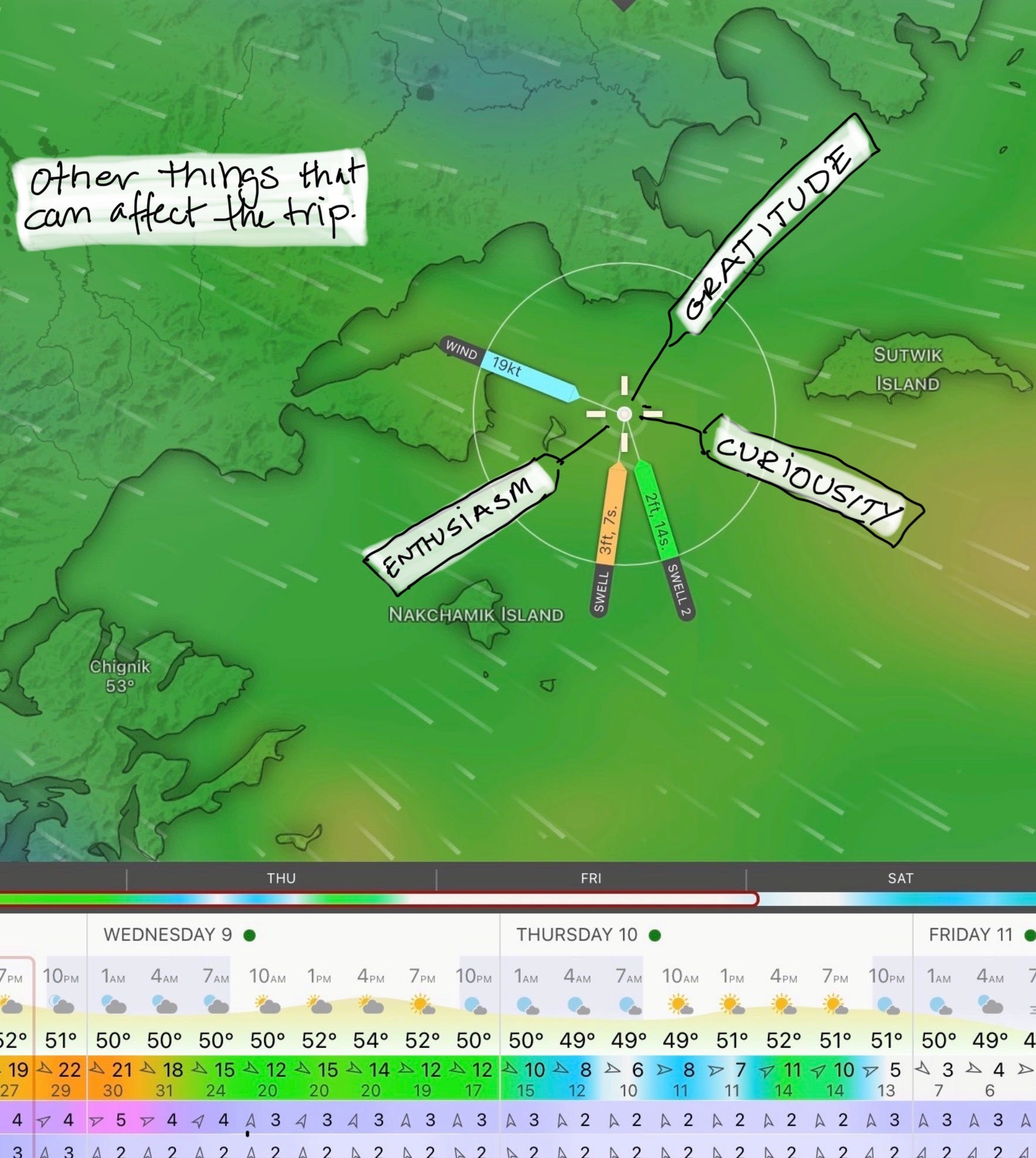
The attitude I’m referring to applies to all aboard. Mine and everyone else’s. It dawned on me recently that we need to make clear to folks before they even sign up that we think of them as student/crew rather than passengers or guests. Time on a boat isn’t a hang-out, passive vacay. TFor our mariner students, they are at the helm in big winds and big water. They help run the boat, cook and clean. It takes work. We are in and on it - together.
With the last trip it started with a three day wait for half of us coming in from Anchorage from a flight glitch, it meant pounding up the northern rim of the Gulf of Alaska trying to beat an 800-mile-wide storm system that wanted to share our route north. Making up for lost time meant fewer chances to explore onshore, not to mention the rather drastically simpler fare from the limited offerings in Sand Point — where the only dinner offering (other than Trident Seafood’s mess hall) is a microwavable hamburger. We would be keeping things simple. And I’ve learned food is something that keeps everybody happy. Again I was pretty nervous.
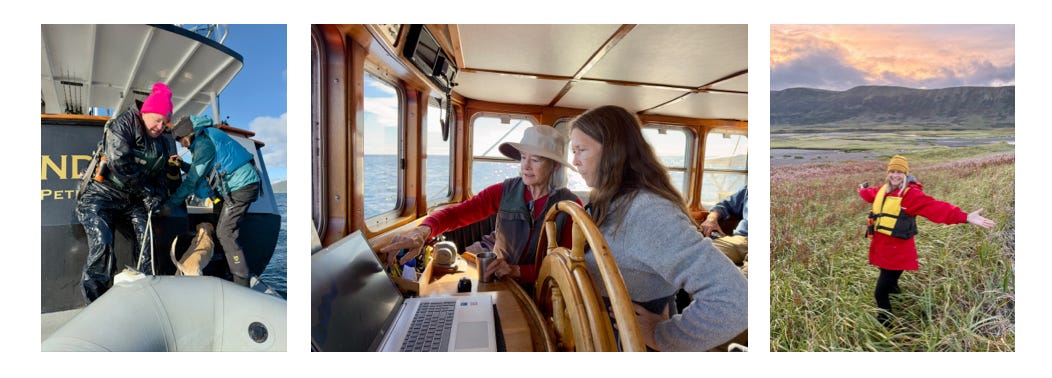
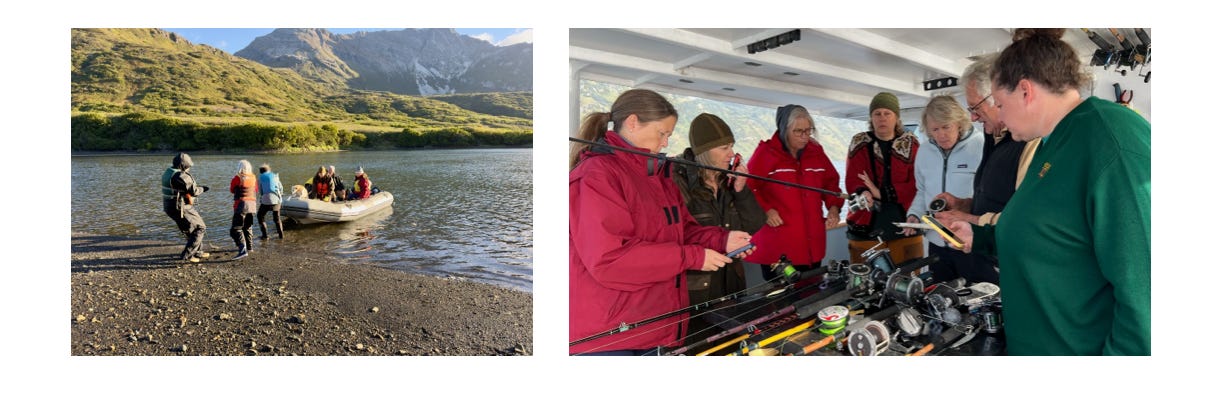
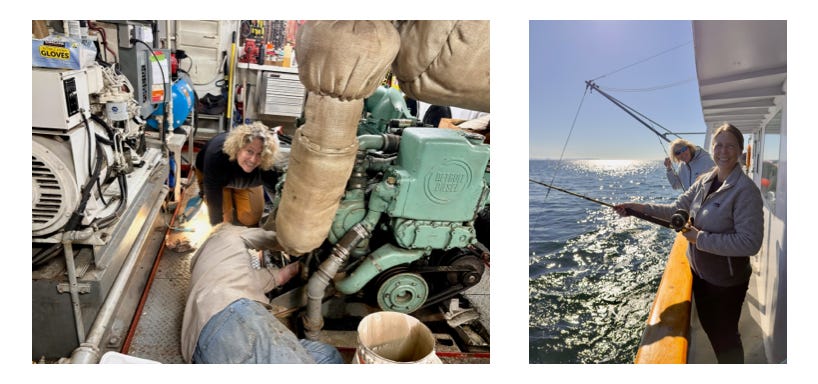
Granted these women were experienced boaters so I figured/prayed they’d have that pitch-in can-do attitude that sailors tend to have. They did. Turned out, in spades. But neither of us had anticipated the level of thoughtfulness, creative problem solving, curiosity, enthusiasm, cooperation and competence - without competition, or complaint. Never a sign of one-upmanship or other insecurities just care for one another, for us, for the boat. It’s one thing to get folks to work together, it’s another to see them loving every minute of doing so.
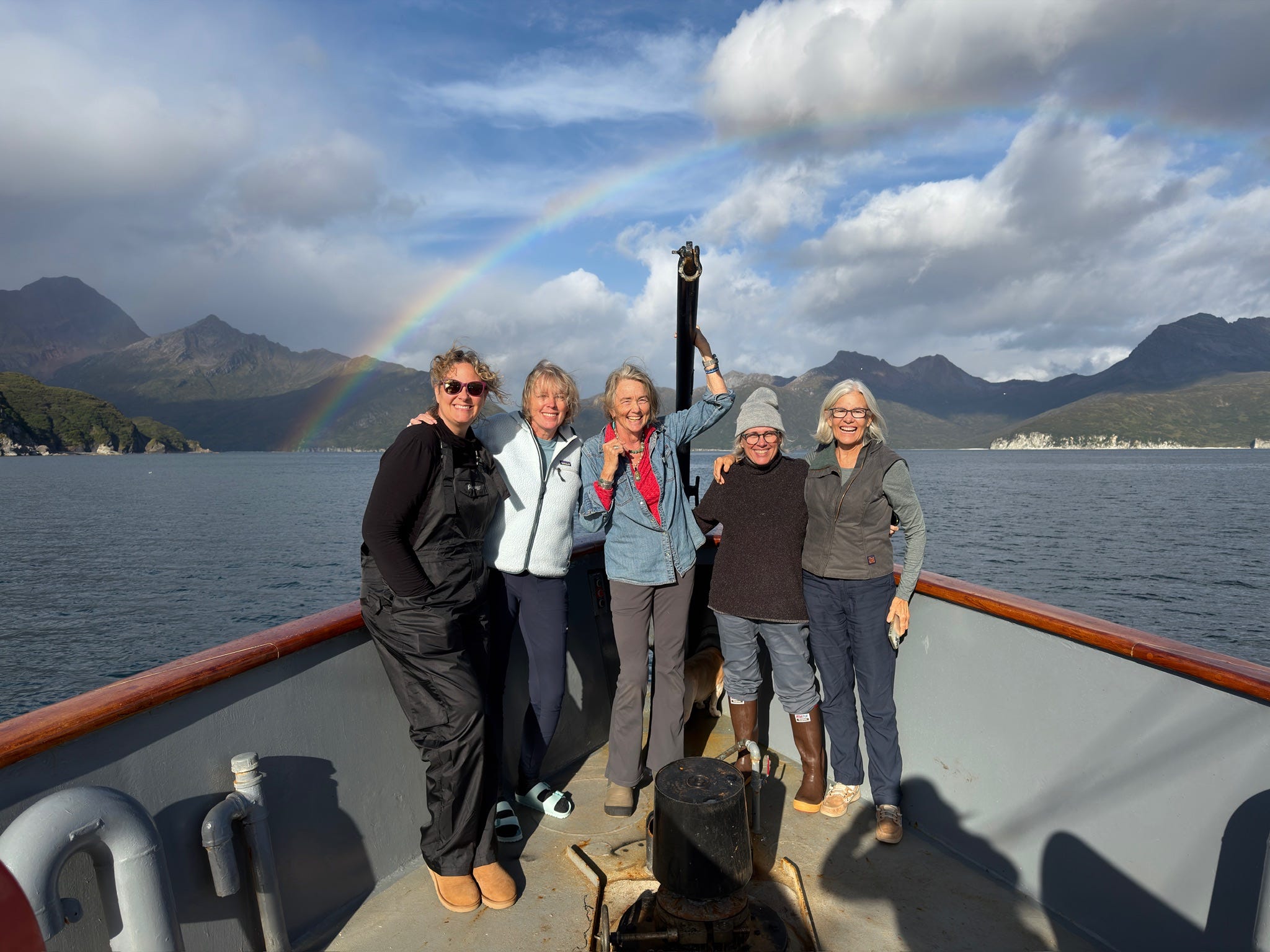
Was it their boat experience or — gender? age? my intuitive interviewing techniques? the weather? In addition to the high winds right on us it was wildly sunny and clear— with the clouds and rain in the distance. Rainbows kicked in on day one and accompanied us most of the way. If one brings good luck, what does it mean to be surrounded by them, for days?
Just the week before Bill and I talked about how much we expect from people, and whether our kids are awesome because we expected a lot, or maybe overly burdened for the same reason. And in terms of Endeavour, whether we expect too much from our folks on board. We probably do. Our highest hope is that they will be as moved by the opportunity to spend time in this vast and remote, incredible wild beauty as we are.
Usually, at the end of a trip, Bill and I debrief to find ways we can improve. We look at mistakes and missed opportunities, from logistics to life jackets. This time I’m stuck on a different question. Instead of learning from our mistakes, what if we learn from the victories?
The world seems, understandably, stuck in such a negative cycle. I think of the almost countless daily infractions - at the four-way stop, the checkout counter, the social media post - if we use the wrong expression, pronoun or gesture. Or god forbid walk our dog without a leash. Throughout the day I examine my behavior to figure out if I could’ve done something better or different for a better or different outcome. But what if we turned it all around and celebrated what’s going right, when it does? I’m seeing how even the act of thinking about positive things is itself a positive experience, and it makes for more.
Gratitude is a feeling we hear about a lot. We drill our children to “say the magic words”. If I had to do it all over again I’d focus on teaching them to notice the magic feelings. Saying thank you is nice - but words are just words. It’s sharing how we feel that matters, and creates more — magic?
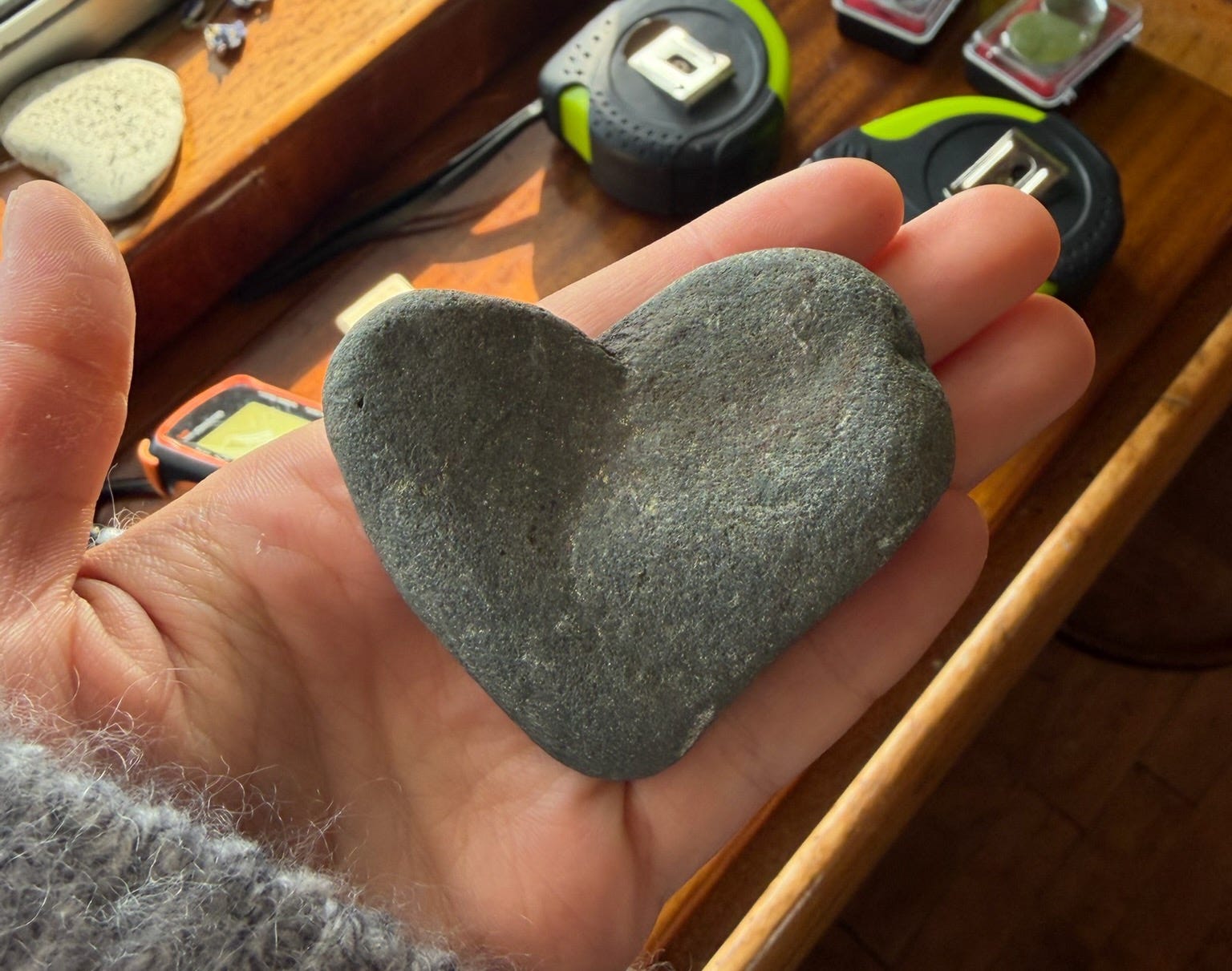
I tell ya — Its either the rainbows at work or the power of positive thinking. On the first day of the mariner course the women shared their dreams and hopes for the trip— confidence was a big one. Every day after you could almost see how their attitude was helping bring about those objectives.
Thinking about all this has reminded me of “When Alice (Waters) Came to Visit” - a chapter in my book, La Finca, what turned out to be the pivotal chapter in both the book and my life. In my fifties I was so happy to finally begin to see I might know what I was doing. 20 years later, while that feels good - it’s seeing what we’re doing means to others. That’s the high.
Just like the Windy app showing what all affects the sea state, crews like this have me clarifying what we’re looking for on board. In addition to experience and the willingness for adventure…I’ll be looking for what matters to them. Because that’s what matters to me.
Positively onward,

PS Have I ever thanked you for reading this? Writing this little blog of mine helps me figure things out. So thank you.
Beautiful Corky! Truly the experience of a lifetime thanks to you and Bill and my co-badass lady mariners. I'd do it again in a heartbeat.
Beautifully written, simply stated… we were/are the best to grace her decks! 🤣
Long sail, Endeavor! ❤️
Thank you, Bill, Corky, Bella, and my fellow mariners for a once-in-a-lifetime experience!
Sending love and gratitude,
The Lucky Late Comer 🥰